


 English

Blog

2025-12-17 14:07:10
As electrical systems continue to demand higher power density, greater efficiency, and improved safety, the busbar has become a critical component in modern power distribution. Understanding how a busbar works helps engineers and system designers choose the right solution for applications ranging from industrial equipment to new energy and renewable energy systems.
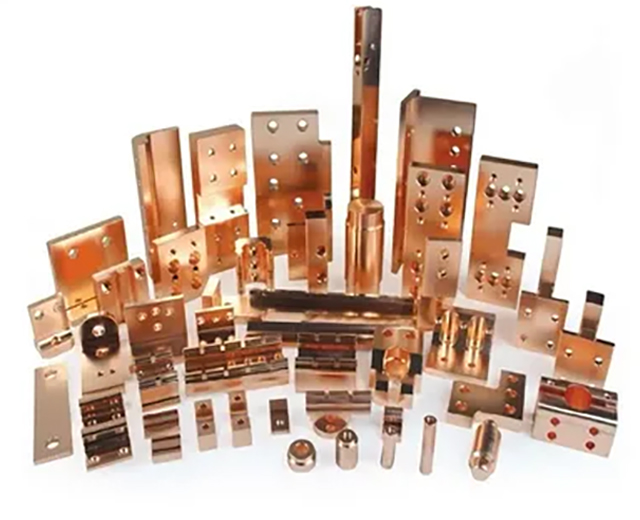
A busbar is a rigid or semi-rigid electrical conductor used to collect, transmit, and distribute electrical power within an electrical system. Instead of relying on multiple cables, a busbar system provides a centralized, low-resistance path for current flow.
Busbars are typically made from:
Copper Busbar for high conductivity
Aluminum Busbar for lightweight and cost efficiency
Depending on safety and space requirements, busbars may be used as bare busbars or insulated busbars.
Electrical power enters the busbar from a power source such as a transformer, generator, inverter, or battery pack. Once energized, current flows along the length of the busbar through its large conductive cross-section. This design minimizes resistance, reduces voltage drop, and improves overall efficiency.
One of the key functions of a busbar system is power distribution. Multiple circuits can be connected to a single busbar, allowing electricity to be distributed evenly and reliably. This is why busbars are commonly used in:
Power distribution panels
Switchgear and control cabinets
Industrial automation systems
A major reason busbars work so effectively is their ability to handle high current. Compared to cables, busbars offer:
Lower electrical resistance
Better heat dissipation
Stable performance under continuous load
High-current copper busbars are especially suitable for EV busbars, Battery Busbars, and energy storage systems.
Because of their flat and wide structure, busbars provide excellent heat dissipation. Efficient thermal management reduces the risk of overheating and extends the service life of the electrical system. In compact designs, insulated busbars maintain safety while preserving thermal performance.
An insulated busbar functions the same as a bare busbar but includes an insulating layer such as PVC, epoxy coating, PET film, or heat-shrink tubing. The insulation:
Prevents accidental contact
Reduces short-circuit risk
Allows closer spacing in compact layouts
This makes insulated busbars ideal for new energy, EV, and battery systems.
Copper busbars work by offering superior electrical conductivity and low energy loss, making them ideal for high-performance power distribution.
Aluminum busbars work well in large-scale power systems where weight and cost reduction are important.
A laminated busbar works by stacking conductive layers separated by insulation, reducing inductance and improving performance in high-frequency applications.
A custom busbar is designed to work according to specific voltage, current, and installation requirements, ensuring optimal system integration.
In new energy and renewable energy systems, busbars play a crucial role in:
EV battery packs
Battery energy storage systems
Solar power inverters
Wind power systems
By ensuring uniform current distribution and minimizing power loss, busbars improve efficiency and system reliability.
| Aspect | Busbar | Cable |
|---|---|---|
| Current path | Wide, rigid conductor | Flexible, multi-strand |
| Resistance | Low | Higher |
| Heat dissipation | Excellent | Limited |
| Reliability | High | Lower |
This comparison explains why busbars are preferred for high-power and compact electrical designs.
Custom busbars work better than standard solutions because they are engineered to match:
Electrical load requirements
Mechanical constraints
Safety standards
This results in improved efficiency, reduced energy loss, and longer system lifespan.
So, how does a busbar work?
A busbar works by acting as a central, low-resistance conductor that efficiently distributes and collects electrical power while handling high current safely. From industrial equipment to new energy and renewable energy systems, busbars remain a fundamental component of modern electrical design.

Copyright © 2026 G AND N FORTUNE LIMITED All rights reserved.