


 English

Blog

2025-12-24 14:22:07
Choosing the right busbar size is essential for efficient, safe, and reliable power distribution in electrical systems. Busbars, whether made of copper or aluminum, act as central conductors that collect, transmit, and distribute electrical power to multiple circuits. Selecting the correct dimensions, material, and insulation ensures minimal voltage drop, reduced heat generation, and long-term system reliability.
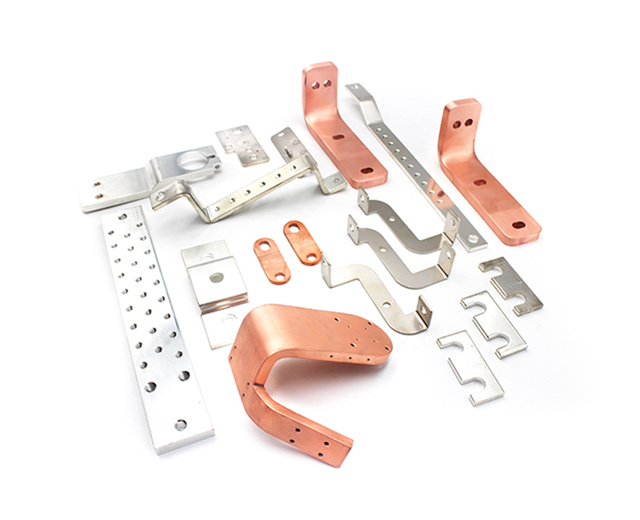
The busbar must safely carry the maximum expected current without overheating.
Flexible Copper Busbar is ideal for applications with vibration, thermal expansion, or dynamic movement, such as battery systems or electric vehicles (EVs).
Solid Copper Busbar provides rigidity and high conductivity, suitable for high-current fixed installations.
Aluminum Busbar offers a lightweight and cost-effective alternative, but requires a larger cross-sectional area for the same current rating compared to copper.
Higher voltage systems require larger spacing or insulated busbars to prevent electrical arcing. Using PVC Insulated Copper Busbar or Epoxy Insulated Copper Busbar can improve safety in high-voltage or compact installations.
Copper Busbar: Excellent conductivity and reliability; widely used in industrial and renewable energy systems.
Aluminum Busbar: Cost-effective and lightweight, suitable for large-scale distribution.
Nickel Copper Busbar: Offers corrosion resistance and enhanced durability for harsh environments.
Ambient temperature, humidity, ventilation, and indoor/outdoor placement influence busbar size. Hot or poorly ventilated environments may require larger or insulated busbars to prevent overheating.
Busbars must withstand short-circuit currents without deformation or damage. High-current systems often require High-Current Copper Busbar Assemblies engineered for extreme electrical loads.
Flexible Copper Busbar: Suitable for dynamic systems with movement or vibration.
Solid Copper Busbar: Ideal for fixed, high-current installations.
Custom Busbar and Copper Busbar Connector Custom solutions ensure a precise fit for complex layouts or battery modules.
PVC Insulated Copper Busbar: Safe, cost-effective, and suitable for most indoor installations.
Epoxy Insulated Copper Busbar: Provides higher insulation strength, heat resistance, and durability for critical systems.
Calculate the maximum operating current of your system.
Determine the system voltage and safety margin.
Select the material based on conductivity, weight, and environmental conditions.
Choose between flexible, solid, or insulated busbars depending on the installation.
Verify short-circuit withstand capability.
If necessary, consider custom fabrication to meet space, layout, or performance requirements.
Industrial power distribution: Factories and manufacturing plants
Renewable energy systems: Solar, wind, and energy storage
Electric vehicle battery systems: Flexible and custom busbar assemblies
Substations and switchgear: High-current power distribution
Data centers and critical infrastructure: Compact, reliable, high-performance busbar solutions
Choosing the right busbar size is critical for ensuring safe, efficient, and reliable power distribution. By considering current rating, voltage level, material, insulation, installation environment, and short-circuit capacity, engineers can select the ideal Flexible Copper Busbar, Solid Copper Busbar, Insulated Copper Busbar, or High-Current Copper Busbar Assemblies for any application. Advanced Copper Busbar Fabrication and Copper Busbar Customization allow tailored solutions to meet unique system requirements, ensuring optimal performance and longevity.

Copyright © 2026 G AND N FORTUNE LIMITED All rights reserved.