


 English

Blog

2026-03-19 17:56:31
Bending a Copper Busbar is a key process in electrical manufacturing and installation. It allows engineers to shape the busbar to fit compact spaces, improve connections, and optimize current flow in systems such as switchgear, power distribution cabinets, and EV battery packs.
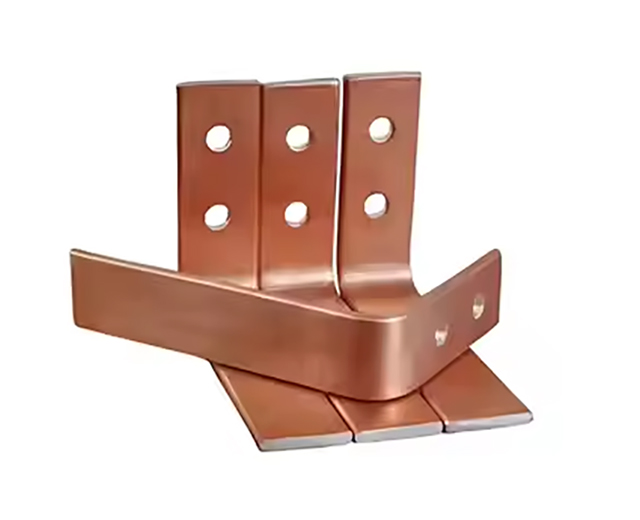
Busbar bending is the process of deforming a straight Copper Busbar into specific angles or shapes without compromising its electrical or mechanical performance.
It is commonly used to:
Fit busbars into confined electrical enclosures
Create efficient electrical connections
Reduce the need for additional connectors or cables
Improve overall system layout
Manual bending is suitable for thin and small busbars.
Steps:
Measure and mark the bending location
Secure the busbar with a clamp or vise
Use a hand bender or lever tool
Apply steady force to reach the desired angle
Advantages:
Low cost
Simple operation
Limitations:
Lower precision
Not suitable for thick busbars
Hydraulic machines are widely used for medium to thick Copper Busbars.
Steps:
Position the busbar in the bending die
Align the bending point accurately
Activate the hydraulic system
Control the bending angle precisely
Advantages:
High accuracy
Suitable for batch production
Consistent results
CNC bending machines are used for high-precision and complex busbar shapes.
Advantages:
Fully automated operation
High repeatability
Ideal for large-scale manufacturing
The bending radius is critical to prevent cracking or weakening of the busbar.
General guideline:
Minimum radius = 1 × thickness (T)
Recommended: 1.5–2 × thickness for better reliability
Annealed (soft) copper → easy to bend
Hard copper → may require more force or heating
Bending along the flat side is easier
Edge bending requires more force and precision
Copper has a small elastic recovery after bending.
Tip: Slightly overbend to achieve the correct final angle.
Maintains material strength and conductivity
Suitable for most busbar applications
Used for thick or rigid busbars
Heating improves ductility
Caution:
Overheating may reduce conductivity
Can damage plated surfaces (tin/nickel)
Using a bending radius that is too small
Applying uneven force
Damaging surface coatings
Misalignment during bending
Ignoring thermal effects after bending
Bent busbars are widely used in:
Electrical distribution systems
Switchgear and control panels
Renewable energy systems
Electric vehicle battery modules
Industrial automation equipment
✔ Space-saving installation
✔ Reduced electrical resistance
✔ Improved system reliability
✔ Faster assembly and maintenance
Understanding how to bend copper busbar is essential for designing efficient and reliable electrical systems. By choosing the right method, maintaining proper bending radius, and protecting the material, you can ensure optimal performance of your busbar.

Copyright © 2026 G AND N FORTUNE LIMITED All rights reserved.