


 English

Blog

2026-03-24 16:23:45
In modern electrical systems, especially in high-power and high-frequency applications, the laminated busbar has become an essential solution for improving performance and reliability. Compared with traditional conductors, a laminated busbar offers lower electrical losses, compact design, and enhanced thermal management.
In this article, we will explain what is a laminated busbar, how it works, its advantages, and why it is widely used in industries such as EVs, renewable energy, and industrial power systems.
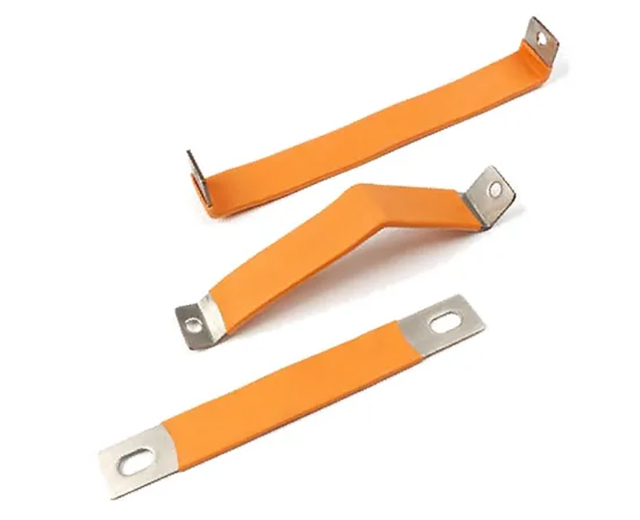
A laminated busbar is a type of busbar made by stacking multiple layers of conductive materials—typically copper or aluminum—separated by thin insulating layers and bonded together into a single compact structure.
It is also commonly referred to as a laminated Copper Busbar when copper is used as the main conductive material.
Unlike traditional Solid Busbars, laminated designs integrate both conductors and insulation into one unit, improving electrical and mechanical performance.
A laminated busbar works by providing parallel conductive paths with minimal spacing between layers. This structure significantly reduces:
Electrical resistance
Inductance
Electromagnetic interference (EMI)
The close proximity of conductors helps cancel magnetic fields, making the laminated busbar ideal for high-frequency and high-current applications.
A typical laminated busbar consists of:
Conductive layers: Copper or aluminum foils
Insulation layers: Polyester (PET), polyimide, or epoxy materials
Bonding process: Heat and pressure lamination
This integrated structure creates a compact and durable insulated busbar solution.
The layered structure minimizes inductance, improving performance in fast-switching circuits.
A laminated busbar combines multiple conductors into one unit, reducing wiring complexity.
Heat is evenly distributed across layers, enhancing cooling efficiency.
Fewer connection points reduce the risk of failure compared to traditional wiring systems.
Closely spaced conductive layers help cancel electromagnetic fields.
| Feature | Laminated Busbar | Traditional Busbar |
|---|---|---|
| Inductance | Low | Higher |
| Space usage | Compact | Larger |
| Assembly | Integrated | Complex |
| EMI performance | Excellent | Moderate |
| Reliability | High | Lower |
The laminated busbar is widely used in high-performance electrical systems:
Battery packs
Power electronics
Inverters
Solar inverters
Wind power converters
Energy storage systems
Power distribution units
Motor drives
Automation systems
Stable and efficient power delivery
Higher conductivity
Better thermal performance
Ideal for high-current systems
Lightweight
Lower cost
Suitable for large-scale applications
As experienced manufacturers, we provide customized laminated busbar solutions:
Custom shapes and dimensions
Multi-layer configurations
Integrated terminals and holes
Advanced insulation materials
Hybrid copper-aluminum designs
Improved electrical efficiency
Reduced system size and weight
Enhanced safety and insulation
Lower installation and maintenance costs
Better performance in high-frequency applications
The laminated busbar is an advanced power distribution solution that combines multiple conductive layers with insulation to deliver superior electrical performance. Whether used in EVs, renewable energy systems, or industrial applications, the laminated copper busbar offers a compact, efficient, and reliable alternative to traditional wiring and solid busbars.
A laminated busbar reduces inductance, saves space, and improves system reliability—making it essential for modern high-power electrical systems.

Copyright © 2026 G AND N FORTUNE LIMITED All rights reserved.