


 English

Blog

2026-03-24 16:28:38
In any electrical panel, one of the most critical components is the bus bar. It serves as the central conductor that distributes electrical power efficiently and safely within the panel. Understanding what is a bus bar in electrical panel is essential for engineers, electricians, and buyers working with power distribution systems.
In this article, we’ll explore the definition, function, types, and advantages of using a busbar in electrical panel, along with practical applications and design considerations.
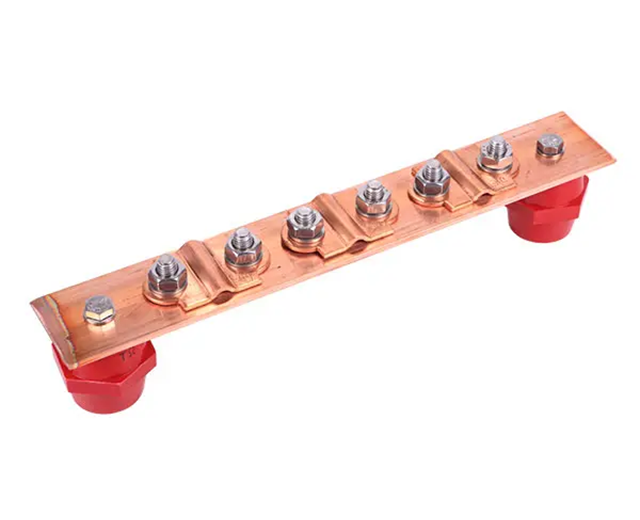
A bus bar in electrical panel is a metallic strip or bar—typically made of copper or aluminum—that conducts and distributes electricity from the main power source to multiple circuits inside the panel.
It acts as a common connection point for incoming and outgoing electrical currents.
Instead of using complex wiring, a busbar in electrical panel simplifies the layout and improves efficiency.
The bus bar collects electrical power from the main supply and distributes it to circuit breakers or outgoing feeders.
Power enters the electrical panel
The busbar in electrical panel receives the current
Circuit breakers connect to the bus bar
Power is distributed to different circuits
This design ensures stable and efficient current distribution across all connected loads.
High conductivity
Low resistance
Ideal for high-current applications
Lightweight and cost-effective
Requires larger size for same current capacity
Covered with protective insulation
Improves safety and reduces risk of short circuits
Multi-layer design
Reduces inductance and improves performance
The main role of a busbar in electrical panel is to distribute electricity efficiently to multiple circuits.
It gathers incoming power from the main supply or transformer.
A bus bar connects:
Circuit breakers
Switchgear components
Protective devices
Helps balance electrical loads and ensures stable operation.
A bus bar can carry significantly higher current than standard cables.
Using a busbar in electrical panel reduces wiring complexity and saves space.
Flat surfaces allow efficient heat transfer, improving safety.
Structured design simplifies assembly and inspection.
Fewer connections reduce the risk of failure.
| Feature | Bus Bar | Cable |
|---|---|---|
| Current capacity | High | Moderate |
| Installation | Simple | Complex |
| Heat dissipation | Better | Limited |
| Space usage | Efficient | Bulky |
The busbar in electrical panel is widely used in:
Industrial control panels
Power distribution boards
Switchgear systems
Renewable energy systems
Data centers
Commercial and residential electrical panels
When selecting a bus bar, consider:
Material (copper or aluminum)
Current rating
Temperature rise
Insulation requirements
Installation environment
Proper design ensures safety, efficiency, and long-term performance.
A bus bar in electrical panel is a vital component that ensures efficient and reliable power distribution. By replacing complex wiring with a structured conductor, the busbar in electrical panel improves system performance, safety, and ease of maintenance.
A bus bar is the central conductor in an electrical panel that distributes power efficiently to multiple circuits.

Copyright © 2026 G AND N FORTUNE LIMITED All rights reserved.