


 English

Cell Contact System
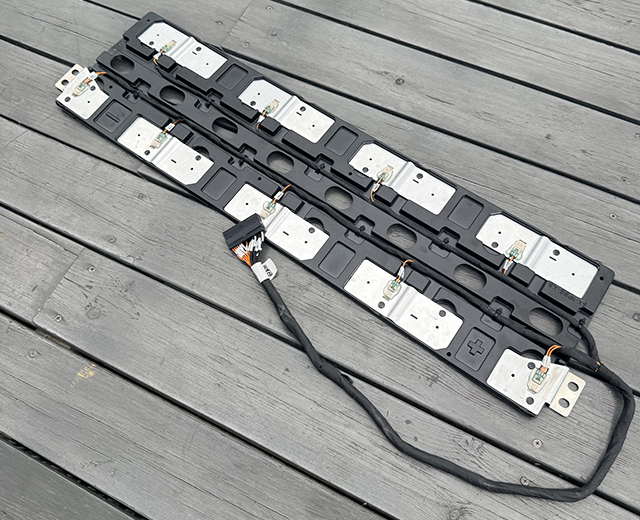
As electric vehicles (EVs) and Energy Storage Systems continue to evolve, the demand for safer, lighter, and more efficient battery packs is growing rapidly. CCS for New Energy Batteries, also known as the Cell Contact System, plays a vital role in ensuring reliable electrical connections, voltage monitoring, and temperature sensing within lithium battery packs.
Our Battery CCS solutions integrate Busbars, Flexible Printed Circuits (FPC), sensors, and connectors into a compact assembly, helping manufacturers improve battery performance, simplify production, and enhance overall safety.
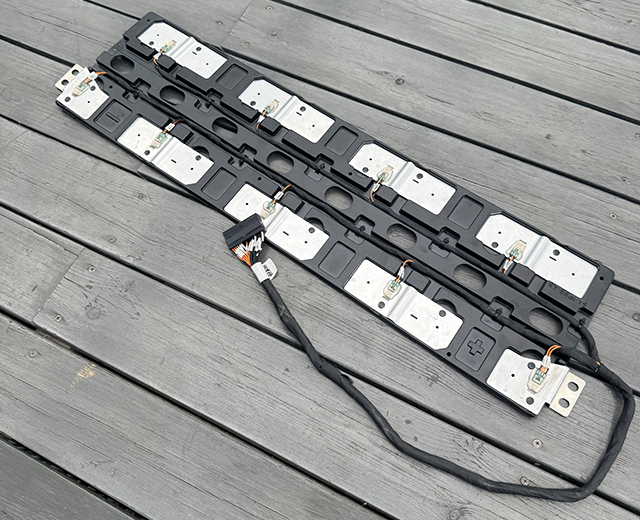
CCS for New Energy Batteries (Cell Contact System) is an integrated electrical connection system used inside EV battery packs, battery modules, and energy storage batteries. It replaces traditional wire harnesses with a highly integrated structure that combines electrical conduction, signal transmission, and battery monitoring into one assembly.
A modern Battery Cell Contact System typically includes:
Copper or aluminum busbars
Flexible Printed Circuit (FPC) or Flexible Die-cut Circuit (FDC)
Cell contact plates
Voltage sampling circuits
Temperature sensors (NTC)
Connectors
Plastic carrier
Insulation components
Optional fuse protection
By integrating these components, the EV Battery CCS significantly reduces wiring complexity while improving manufacturing efficiency and battery reliability.
The Cell Contact System serves as the communication and power transmission bridge between battery cells and the Battery Management System (BMS).
Its working principle can be divided into several steps:
The Battery Busbar assembly connects individual battery cells in series or parallel, allowing electrical current to flow efficiently throughout the battery pack with minimal resistance.
Each battery cell is connected to the Flexible Printed Circuit (FPC CCS) through dedicated sampling points.
The FPC accurately collects voltage data from every cell and transmits it to the Battery Management System (BMS), enabling real-time monitoring of battery status.
Integrated NTC temperature sensors continuously detect the temperature of battery cells.
The collected temperature signals are transmitted through the CCS to the BMS, allowing the cooling system or protection mechanisms to respond immediately if abnormal temperatures are detected.
Many CCS assemblies incorporate fuse structures or overcurrent protection devices.
When excessive current or short circuits occur, these protection components help isolate faulty circuits and improve battery safety.
Besides carrying electrical current, the Cell Contact System for EV Battery also transmits monitoring signals between battery cells and the BMS, enabling intelligent battery management, balancing, and fault diagnosis.
| Parameter | Specification |
|---|---|
| Product Name | CCS for New Energy Batteries |
| Brand | G&N |
| Model Number | G&N |
| Place of Origin | Guangdong, China |
| Application | Electric Power Transmission, EV Battery Packs, Energy Storage Systems (ESS), Battery Modules |
| Rated Voltage | 120V / 208V / 220V / 230V / 400V |
| Rated Current | 50A / 80A / 100A / 125A / 140A / 200A / 250A / 300A / 1000A / 1500A |
| IP Rating | IP67 |
| Type | Distribution Box, LV Switchgear Cabinet, Cell Contact System (CCS) |
| Number of Sockets | 9 |
| Lock Type | None |
| Conductor Material | Copper or Aluminum (Customizable) |
| Circuit Type | FPC CCS / FDC CCS / Customized |
| Operating Temperature | Customized According to Application |
| Customization | OEM & ODM Available |
| Quality Standard | Strict Quality Inspection Before Delivery |
Our CCS for New Energy Batteries is designed to meet the demanding requirements of modern electric vehicles and energy storage systems.
Precision-engineered copper busbars and aluminum busbars for EV battery applications ensure low resistance and efficient power transmission.
Integrated FPC technology significantly reduces wiring weight compared with traditional wire harness solutions.
The system combines multiple electrical components into one compact assembly, simplifying battery pack architecture.
High-quality insulation materials and precision manufacturing provide stable electrical performance under vibration and harsh operating conditions.
Designed for automated production lines, our CCS assembly improves manufacturing efficiency while reducing labor costs.
We provide customized Battery Module Connectors, Battery Busbar Assemblies, and complete Cell Contact System solutions according to customer battery pack designs.
Compared with traditional wiring harnesses, Battery CCS offers numerous advantages:
Reduced battery pack weight
Lower assembly costs
Simplified production process
Higher automation efficiency
Improved electrical conductivity
Accurate voltage sampling
Reliable temperature monitoring
Enhanced battery safety
Better long-term durability
Compact battery module design
Different battery applications require different CCS structures.
Flexible Printed Circuit technology provides lightweight construction, excellent flexibility, and highly accurate signal transmission.
Ideal for:
Passenger EVs
High-energy-density battery packs
Premium electric vehicles
Flexible Die-cut Circuit solutions offer a cost-effective alternative while maintaining excellent electrical performance.
Suitable for:
Commercial battery production
Large-scale manufacturing
Traditional wiring solutions are still used in some battery systems but involve more manual assembly and greater overall weight.
The latest integrated CCS Busbar combines:
Busbars
Flexible circuits
Sensors
Connectors
Plastic carrier
into one modular unit, maximizing production efficiency and battery reliability.
Our CCS for New Energy Batteries is widely used in:
Electric Vehicles (EV)
Hybrid Electric Vehicles (HEV)
Plug-in Hybrid Electric Vehicles (PHEV)
Battery Energy Storage Systems (ESS)
Electric Buses
Electric Trucks
Commercial Electric Vehicles
Electric Motorcycles
Battery Modules
Lithium Battery Packs
We provide high-quality Cell Contact Systems manufactured under strict quality control standards.
Our advantages include:
Precision stamping and busbar manufacturing
Custom copper and aluminum busbar design
FPC and FDC integration
High-precision voltage sampling solutions
OEM & ODM customization
Strict quality inspection
Stable production capacity
Fast delivery
Technical support throughout product development
Whether you require a standard Battery CCS, a customized CCS Assembly, or a complete Cell Contact System for EV Battery, our engineering team can provide reliable solutions tailored to your battery pack requirements.
CCS (Cell Contact System) is an integrated electrical connection system used inside EV battery packs. It combines busbars, flexible circuits, voltage sensing, temperature monitoring, and connectors into one assembly to improve battery safety, efficiency, and manufacturing productivity.
A traditional wire harness uses multiple individual wires and connectors, while a CCS integrates electrical conduction, signal transmission, and monitoring functions into a compact module. This reduces weight, simplifies assembly, and improves reliability.
Battery CCS typically uses copper or aluminum busbars, flexible printed circuits (FPC), engineering plastics, insulation materials, temperature sensors, and electrical connectors.
Yes. CCS assemblies can be customized in terms of busbar layout, circuit design, connector type, sensing functions, and mounting structure to meet the specific requirements of EVs, energy storage systems, and other lithium battery applications.

Copyright © 2026 G AND N FORTUNE LIMITED All rights reserved.