


 English

Cell Contact System
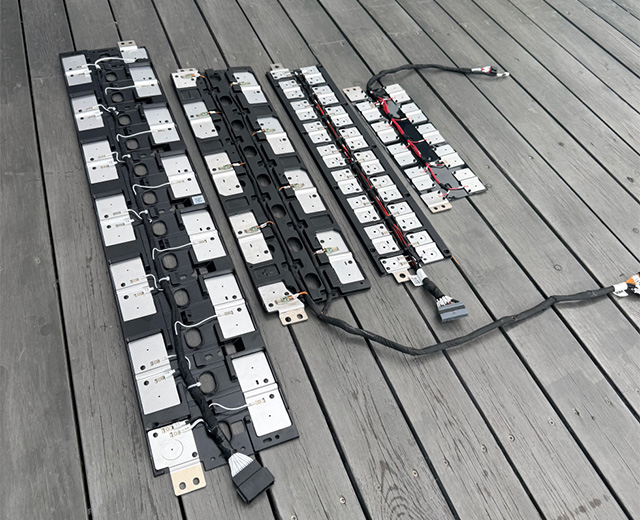
A Cell Contact System (CCS) is an integrated electrical connection solution used in modern lithium battery packs for electric vehicles (EV), hybrid electric vehicles (HEV), plug-in hybrid vehicles (PHEV), and Energy Storage Systems (ESS). It combines current conduction, voltage sampling, temperature monitoring, and signal transmission into one compact assembly, significantly improving battery safety, efficiency, and manufacturability.
At G&N Fortune Limited, we design and manufacture custom Cell Contact Systems, including Battery CCS, EV battery busbar assemblies, and FPC CCS solutions, providing flexible and scalable options for global battery pack manufacturers.
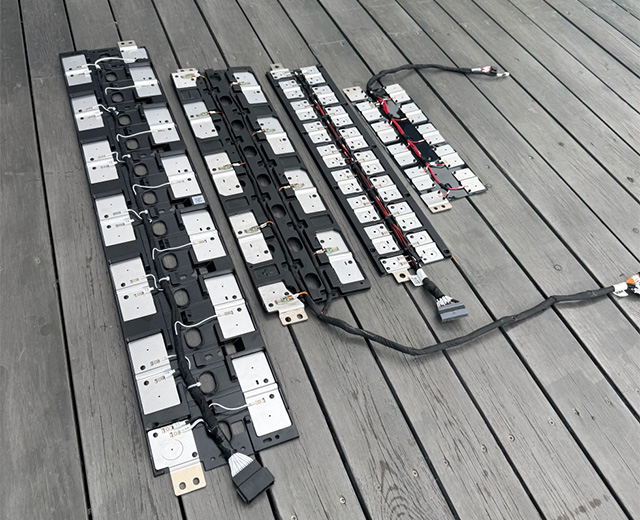
A Cell Contact System is an internal battery pack component that connects individual lithium cells and enables communication between the battery cells and the Battery Management System (BMS).
It typically replaces traditional wire harness systems and integrates multiple functions:
Electrical connection between cells
Voltage sampling for each cell
Temperature monitoring via NTC sensors
Signal transmission to BMS
Safety and insulation structure
A Cell Contact System for EV Battery is widely used in prismatic, cylindrical, and pouch cell battery modules.
The working principle of a Battery Cell Contact System can be explained in four steps:
The battery Busbar assembly connects cells in series or parallel to ensure stable current flow with low resistance.
The FPC CCS (Flexible Printed Circuit System) collects voltage signals from each cell and transmits them to the BMS.
Integrated NTC sensors measure cell temperature in real time to prevent overheating and thermal runaway.
All collected data is transmitted to the Battery Management System, which manages balancing, charging, and discharging control.
Our Cell Contact Systems are available in multiple standard specifications and fully customizable configurations to meet different battery pack designs.
| Parameter | Specification |
|---|---|
| Product Name | Cell Contact System (CCS) |
| Application | EV Battery Packs / ESS / Battery Modules |
| Busbar Material | Copper / Aluminum |
| Circuit Type | FPC CCS / FDC CCS |
| Voltage Rating | 48V / 120V / 400V / Customized |
| Current Rating | 50A – 1500A (Customized) |
| Temperature Sensor | NTC (Optional Quantity Customizable) |
| Insulation Material | High-performance engineering plastic |
| Structure Type | Integrated CCS Assembly |
| Connector Type | Customized |
| Cell Compatibility | Prismatic / Cylindrical / Pouch Cells |
| Mounting Type | Modular / Custom Design |
| Manufacturing Service | OEM / ODM |
Suitable for mass production battery modules with stable and standardized layouts.
Fully customized Battery CCS solution based on battery pack structure, cell layout, and electrical requirements.
Uses flexible circuits and lightweight materials for compact and high-energy-density battery packs.
Combines busbars, FPC, connectors, and sensors into a single modular unit for automated production.
High-quality copper busbar for battery pack and aluminum options ensure efficient current transmission.
Combines electrical conduction and signal collection in one CCS Assembly, reducing wiring complexity.
Replaces traditional harness systems with flexible busbar technology, reducing overall battery weight.
Stable performance under vibration, temperature variation, and high-current conditions.
Supports complete OEM/ODM customization for different EV and ESS applications.
Improved battery safety
Reduced wiring complexity
Higher energy efficiency
Accurate voltage monitoring
Real-time temperature sensing
Lower assembly cost
High automation compatibility
Compact battery pack design
Our Cell Contact System for EV Battery is widely used in:
Electric Vehicles (EV)
Hybrid Electric Vehicles (HEV)
Plug-in Hybrid Electric Vehicles (PHEV)
Battery Energy Storage Systems (ESS)
Electric buses and trucks
Lithium battery packs
Battery modules
We provide complete custom battery CCS solutions including:
Custom Cell Contact System design
Battery busbar assembly manufacturing
EV battery busbar integration
Flexible busbar solutions
OEM Cell Contact System production
Full engineering support from design to mass production
With advanced manufacturing capabilities, we ensure high precision, stable quality, and fast delivery for global customers.
A Cell Contact System is an integrated battery component that connects individual cells and enables voltage and temperature monitoring for the Battery Management System.
Yes. We provide full customization including busbar design, circuit layout, connector type, sensor quantity, and structural design.
Common materials include copper, aluminum, FPC circuits, insulation plastics, and NTC temperature sensors.
A battery busbar only conducts current, while a Cell Contact System integrates current conduction, voltage sampling, and temperature monitoring.

Copyright © 2026 G AND N FORTUNE LIMITED All rights reserved.