


 English

Blog

2026-07-01 14:39:11
As electric vehicles (EVs), energy storage systems (ESS), and renewable energy technologies continue to evolve, lithium battery packs require more intelligent and reliable electrical connection solutions. A Cell Contact System (CCS) is one of the most important components inside a battery pack, providing the electrical bridge between individual battery cells and the Battery Management System (BMS). Also known as a Battery CCS or Battery Cell Contact System, it helps monitor voltage, temperature, and signal transmission while improving battery safety, performance, and manufacturing efficiency. This article explains what a Cell Contact System is, how it works, its key components, and why it plays a vital role in CCS for New Energy Batteries.
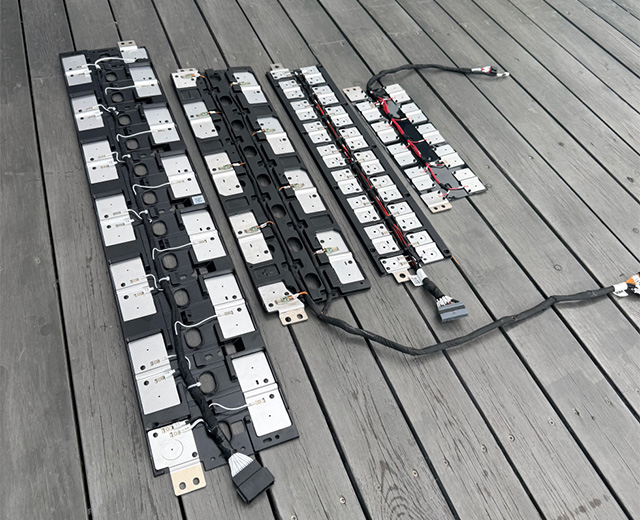
A Cell Contact System (CCS) is an integrated electrical connection module installed inside lithium battery packs. It combines Battery Busbars, flexible circuits, connectors, voltage sensing lines, and temperature sensors into a compact assembly that connects battery cells with the Battery Management System (BMS).
Unlike traditional wire harnesses, a Battery Cell Contact System reduces wiring complexity, lowers overall weight, and improves assembly efficiency. It continuously collects battery data and sends it to the BMS, allowing the system to monitor battery health, optimize charging and discharging, and ensure safe operation.
Today, Battery CCS solutions are widely used in electric vehicles, energy storage systems, and other CCS for New Energy Batteries applications.
A Battery CCS acts as the communication and electrical connection platform inside a battery pack. It enables the Battery Management System to monitor and control every battery cell in real time.
The Cell Contact System uses precision-engineered contact terminals and busbars to establish secure electrical connections between battery cells. These connections ensure stable current flow with minimal resistance.
Every battery cell is connected to voltage sensing circuits integrated into the Battery Cell Contact System. The BMS continuously measures each cell's voltage to maintain balanced charging and discharging.
Temperature sensors installed within the Cell Contact System CCS monitor thermal conditions throughout battery operation. If abnormal temperatures are detected, the BMS can activate protective functions to prevent overheating.
Flexible printed circuits (FPC) or printed circuit boards (PCB) transfer voltage and temperature data from the battery cells to the Battery Management System, enabling precise battery management.
By continuously monitoring battery status, the Battery CCS helps detect overvoltage, undervoltage, overcurrent, overheating, and cell imbalance, significantly improving battery safety and service life.
A modern Cell Contact System integrates several key components into one compact assembly.
The Battery Busbar carries electrical current between battery cells. Copper and Aluminum Busbars are commonly used because they provide excellent electrical conductivity and mechanical strength.
The FPC integrates voltage sensing circuits while reducing wiring complexity and improving installation efficiency.
These precision contact points provide reliable electrical connections between individual battery cells and the CCS.
Integrated NTC sensors continuously monitor battery temperature, allowing the Battery Management System to respond quickly to abnormal conditions.
Connectors provide secure communication between the Battery Cell Contact System and the Battery Management System.
The Battery Busbar is one of the most critical components in a Battery CCS because it is responsible for carrying high current between battery cells.
A high-quality busbar minimizes electrical resistance, reducing energy loss and improving charging and discharging efficiency.
Properly designed Battery Busbars ensure stable electrical connections, helping extend battery life and reduce maintenance requirements.
Aluminum Busbars provide an excellent balance between conductivity and weight, making them ideal for electric vehicle battery systems.
A Battery Cell Contact System provides several advantages over conventional wiring solutions.
Integrated circuits and battery busbars reduce the number of separate wires and connectors, making battery production faster and more efficient.
Accurate voltage and temperature monitoring enables better battery balancing and longer service life.
Continuous monitoring helps protect the battery pack from electrical and thermal faults.
Compared with traditional wiring harnesses, a Cell Contact System significantly reduces battery pack weight.
The integrated design supports automated production and improves manufacturing consistency.
The demand for CCS for New Energy Batteries continues to grow as lithium battery technology expands into new industries.
Passenger cars, commercial vehicles, buses, and trucks all rely on Battery CCS solutions for reliable battery monitoring.
Residential and commercial energy storage systems use Battery Cell Contact Systems to improve battery performance and operational safety.
Forklifts, automated guided vehicles (AGVs), robotics, medical equipment, and backup power systems all benefit from reliable Cell Contact System CCS technology.
Many battery manufacturers require a Custom Cell Contact System because battery pack designs vary depending on the application.
A Custom Cell Contact System can be designed with different:
Battery Busbar materials
Busbar layouts
FPC or PCB structures
Connector types
Cell configurations
Voltage sensing circuits
Temperature sensor locations
Surface treatments
A customized Battery CCS offers better electrical performance, easier assembly, improved production efficiency, and greater compatibility with specific battery pack designs.
A Cell Contact System (CCS) is an essential component of modern lithium battery packs. By integrating busbars, voltage sensing circuits, connectors, and temperature monitoring into one compact module, a Battery Cell Contact System enables efficient communication between battery cells and the Battery Management System.
As the demand for electric vehicles and renewable energy storage continues to increase, CCS for New Energy Batteries will remain a key technology for improving battery safety, performance, and manufacturing efficiency. Whether using a standard Battery CCS or a Custom Cell Contact System, selecting the right solution is critical for achieving reliable and long-lasting battery performance.
A Cell Contact System is an integrated electrical connection assembly that connects battery cells with the Battery Management System for voltage monitoring, temperature sensing, and signal transmission.
A Battery CCS integrates multiple electrical functions into a compact module, reducing wiring complexity, improving reliability, and simplifying battery assembly.
A Battery Busbar transfers current between battery cells while minimizing electrical resistance and improving battery efficiency.
It is widely used in electric vehicles, battery energy storage systems, industrial lithium batteries, and other renewable energy applications.
Yes. A Custom Cell Contact System can be designed according to battery cell type, current capacity, busbar material, connector layout, and battery pack structure.

Copyright © 2026 G AND N FORTUNE LIMITED All rights reserved.