


 English

Blog

2026-07-08 14:43:22
A reliable grounding system is one of the most important parts of any electrical installation. Whether in industrial power distribution, data centers, renewable energy systems, telecommunications, or electrical control panels, a Grounding Busbar provides a safe and efficient path for fault current to flow into the earth. Understanding how does grounding busbar work helps engineers, contractors, and global buyers select the right grounding solution for their projects.
This guide explains what a grounding busbar is, how it works, its advantages, installation methods, key precautions, and common applications. It also introduces the most common types of Ground Bus Bar, electrical grounding busbar, copper grounding busbar, aluminum grounding busbar, and custom grounding solutions used in modern electrical systems.
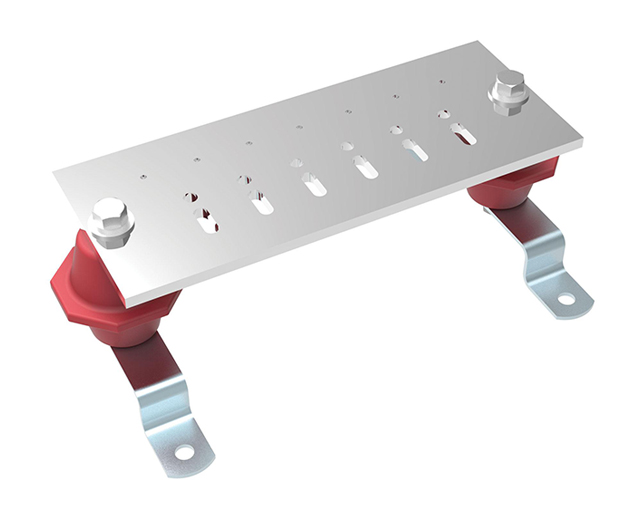
A grounding busbar, also known as a ground bus bar, grounding bar, earth busbar, or earth bus bar, is a conductive metal bar designed to connect multiple grounding conductors to one central grounding point.
Unlike Power Busbars that distribute electrical current to loads, a grounding busbar system is dedicated to safety. Its primary purpose is to collect leakage current, fault current, and static electricity, then safely direct them to the earth through the grounding network.
Grounding busbars are commonly manufactured from:
Copper grounding busbar
Aluminum grounding busbar
Tin-plated copper
Nickel-plated copper
Stainless steel (for special environments)
Among these materials, copper remains the preferred choice because of its outstanding electrical conductivity, corrosion resistance, and long service life.
To understand how does grounding busbar work, it helps to examine the flow of electricity during both normal operation and electrical faults.
During normal operation, electrical equipment operates without significant current flowing through the grounding system. The grounding busbar simply serves as a common connection point for protective earth conductors.
When an insulation failure, short circuit, or equipment fault occurs, the situation changes immediately.
Instead of allowing dangerous voltage to remain on the equipment enclosure, the electrical grounding busbar provides a low-resistance path for fault current.
The current flows through:
Electrical Equipment → Ground Wire → Grounding Busbar → Ground Electrode → Earth
This process allows protective devices such as:
Circuit breakers
Fuses
Residual current devices (RCDs)
Ground fault protection devices
to detect abnormal current and disconnect the power supply quickly.
Without a properly installed ground bus bar, dangerous touch voltages may remain on electrical equipment, creating serious shock hazards and increasing the risk of equipment damage.
A grounding busbar system performs several important functions within an electrical installation.
The primary function is providing a safe path for fault current.
Instead of allowing current to pass through equipment frames or personnel, the grounding busbar safely transfers electrical energy into the earth.
A grounding busbar connects multiple grounding conductors together, ensuring that all metallic equipment remains at nearly the same electrical potential.
This greatly reduces shock hazards.
In buildings equipped with lightning protection systems, the earth busbar helps conduct lightning current safely into the grounding network.
Factories handling electronic products, chemicals, or explosive materials often use grounding bars to discharge static electricity safely.
Grounding busbars also reduce electromagnetic interference (EMI), improving the performance of communication equipment, PLC systems, servers, and sensitive electronic instruments.
Different electrical systems require different grounding solutions.
A copper grounding busbar offers:
Excellent electrical conductivity
High current carrying capacity
Superior corrosion resistance
Long service life
It is commonly installed in substations, industrial plants, hospitals, and data centers.
An aluminum grounding busbar provides:
Lightweight construction
Lower material cost
Good conductivity
Suitable for large electrical installations
Proper surface treatment is recommended to prevent oxidation.
An insulated grounding busbar features a protective insulating coating while leaving designated connection points exposed.
Advantages include:
Improved operator safety
Reduced accidental contact
Better moisture protection
Compact installation
A custom grounding busbar can be manufactured according to customer drawings with customized:
Length
Width
Thickness
Hole positions
Surface finish
Mounting configuration
Custom products are widely used in OEM electrical equipment and specialized industrial projects.
Installing a professional grounding busbar system offers numerous benefits.
Proper grounding protects personnel from electric shock by directing dangerous fault current safely into the earth.
Grounding reduces the possibility of equipment damage caused by:
Insulation failure
Lightning surges
Electrical faults
Static discharge
A Ground Bus Bar provides one centralized grounding point, eliminating messy grounding wire connections.
This simplifies installation and maintenance.
Grounding conductors connected to one busbar are much easier to inspect during routine maintenance.
High-quality copper grounding busbars provide excellent corrosion resistance and stable electrical performance for many years.
Correct installation is essential for system safety and compliance.
Choose a copper grounding busbar, aluminum grounding busbar, or insulated grounding busbar based on:
Current capacity
Environmental conditions
Installation location
Applicable standards
Install the busbar on insulated supports or inside an electrical panel.
Maintain proper clearance from live conductors.
Attach all protective earth conductors using bolts, terminals, or compression lugs.
Ensure every connection is tight and secure.
The grounding busbar must be connected directly to the building grounding system using an appropriately sized grounding conductor.
After installation, verify:
Ground continuity
Earth resistance
Connection tightness
Visual condition
To maximize safety and performance, consider the following recommendations:
Select the correct busbar size for the expected fault current.
Use corrosion-resistant hardware.
Tighten bolts according to the specified torque values.
Keep all contact surfaces clean and free from oxidation.
Avoid mixing copper and aluminum without suitable transition connectors to reduce galvanic corrosion.
Clearly identify grounding conductors using standard color codes.
Periodically inspect all grounding connections.
Following international standards such as IEC, UL, or local electrical regulations helps ensure safe operation.
A grounding busbar is widely used in many industries.
Provides centralized grounding inside switchboards and distribution cabinets.
Protects motors, PLC cabinets, drives, and production equipment.
Maintains stable grounding for servers, UPS systems, and network equipment.
Used in:
Solar power systems
Wind turbines
Battery energy storage systems (ESS)
Provides protective grounding for chargers and associated electrical equipment.
Supports grounding for communication cabinets, transmission equipment, and signal protection systems.
Protects sensitive medical equipment while reducing electrical interference.
Although aluminum products are suitable for many projects, copper grounding busbars remain the preferred solution for demanding applications because they offer:
Lower electrical resistance
Higher conductivity
Better corrosion resistance
Higher mechanical strength
Longer service life
Excellent performance in humid or corrosive environments
For critical electrical infrastructure, copper provides outstanding reliability.
Understanding how does grounding busbar work is essential for designing safe and efficient electrical systems. A properly designed grounding busbar system provides a low-resistance path for fault current, protects personnel and equipment, minimizes electrical hazards, and improves overall system reliability.
Whether you require a copper grounding busbar, aluminum grounding busbar, insulated grounding busbar, or a custom grounding busbar, selecting the right material, installing it correctly, and performing regular inspections will ensure long-lasting and dependable performance across industrial, commercial, renewable energy, and power distribution applications.

Copyright © 2026 G AND N FORTUNE LIMITED All rights reserved.