


 English

Blog

2026-07-14 09:59:50
Braided copper wire is a flexible electrical conductor made by weaving multiple strands of fine copper wire into a flat or tubular braid. Thanks to its excellent electrical conductivity, flexibility, and vibration resistance, braided copper wire is widely used in electrical grounding, power transmission, battery systems, industrial equipment, and renewable energy applications.
While many people search for braided copper wire uses, they often discover that for high-current applications, a Braided Busbar or braided Copper Busbar provides a more suitable solution. Understanding the differences between these products can help engineers and buyers select the right conductor for their electrical systems.
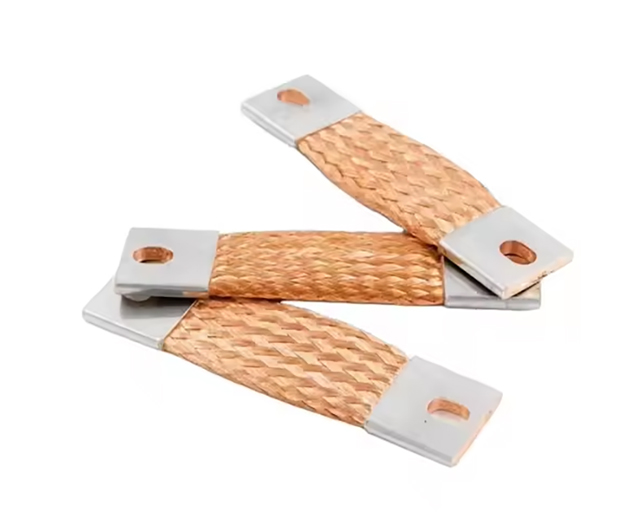
A braided copper wire is manufactured by weaving multiple fine copper wires together to create a flexible conductor capable of carrying electrical current while withstanding movement and vibration.
Common material options include:
Bare copper braided wire
Tinned braided copper wire
Silver-plated braided copper wire
Compared with rigid conductors, braided copper wire offers greater flexibility, making it suitable for dynamic electrical connections and grounding applications.
The primary braided copper wire uses include flexible electrical connections, grounding systems, vibration compensation, and current transmission across a wide range of industries.
One of the most common braided copper wire uses is grounding.
Braided copper wire provides a reliable path for fault current and helps improve electrical safety in:
Switchgear
Electrical cabinets
Transformers
Power distribution systems
Its flexible construction allows easy installation even in confined spaces.
Modern battery systems require electrical connectors that can withstand vibration, thermal expansion, and repeated operating cycles.
Braided copper wire is commonly used for:
Battery module grounding
Battery pack connections
Battery energy storage systems (BESS)
However, when higher current capacity is required, many manufacturers choose a braided busbar instead of standard braided wire.
In electric vehicles, braided copper conductors are widely used for:
EV battery grounding
Power distribution
Motor grounding
Charging equipment
For battery power transmission, an EV battery braided busbar provides greater current carrying capability while maintaining flexibility.
Industrial equipment often experiences continuous vibration and mechanical movement.
Braided copper wire is commonly installed in:
Welding equipment
Industrial robots
Motors
Generators
Automation equipment
Its flexibility helps reduce mechanical stress and extend equipment life.
Braided copper wire also plays an important role in renewable energy systems such as:
Solar power systems
Wind power equipment
Battery storage systems
Power conversion equipment
Its excellent conductivity ensures efficient electrical performance in demanding environments.
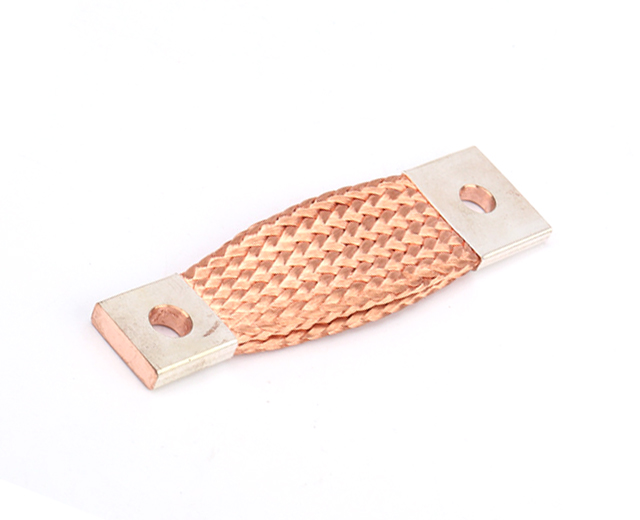
Although they look similar, Braided Copper Wire vs Braided Busbar is one of the most common questions asked by engineers and buyers.
The two products share the same braided conductor concept but are designed for different applications.
| Feature | Braided Copper Wire | Braided Busbar |
|---|---|---|
| Structure | Braided fine copper wires | Braided copper wires or copper foils with larger cross section |
| Flexibility | Excellent | Excellent |
| Current Capacity | Medium | Medium to High |
| Typical Use | Grounding and flexible connections | High-current power transmission |
| Common Industries | Electrical equipment | EV, battery systems, power distribution |
A braided copper connector is often used for grounding or flexible electrical connections, while a Braided Copper Busbar is specifically engineered for transferring higher current between power components.
Although braided copper wire performs well in many electrical applications, high-current systems often require a braided Flexible Busbar with greater current carrying capability and improved mechanical strength.
A copper braided busbar offers several advantages:
Higher current capacity
Larger conductive cross-sectional area
Lower electrical resistance
Better heat dissipation
Improved connection reliability
Excellent vibration resistance
These characteristics make a flexible braided busbar the preferred solution for demanding electrical systems.
As electrical systems continue to evolve, braided busbar products have become increasingly important in industries requiring reliable power transmission.
Typical applications include:
An EV battery braided busbar is widely used in:
Battery packs
Battery modules
Power distribution units
Charging systems
Its flexible structure helps absorb vibration while maintaining stable electrical performance.
A high current braided busbar is commonly used for:
Battery rack connections
Module interconnections
Energy storage cabinets
A flexible copper braided busbar is suitable for:
Switchgear
Electrical cabinets
Transformers
Industrial automation equipment
Its durability and flexibility improve long-term connection reliability.
 Custom Braided Busbar Solutions
If your application requires higher current transmission than standard braided copper wire can provide, a custom braided busbar is often the ideal solution.
As a professional manufacturer, we offer:
Braided busbar
Braided copper busbar
Flexible braided busbar
Copper braided busbar
Flexible copper braided busbar
Tinned copper braided busbar
High current braided busbar
EV battery braided busbar
Customized terminal designs
OEM and ODM manufacturing services
Our engineering team can manufacture braided busbars according to your drawings, dimensions, current requirements, and application specifications.
When selecting the right electrical conductor, consider the following:
Choose braided copper wire if you need:
Flexible grounding
Electrical bonding
Medium-current electrical connections
Vibration compensation
Choose a braided busbar if you require:
High-current transmission
Battery pack connections
EV power systems
Energy storage equipment
Industrial power distribution
Long-term connection reliability
For most high-power electrical systems, a braided copper busbar offers superior electrical performance compared with standard braided copper wire.
Braided copper wire is mainly used for grounding, flexible electrical connections, vibration compensation, battery systems, renewable energy equipment, and industrial electrical applications.
Braided copper wire is typically used for grounding and medium-current flexible connections, while a braided busbar is designed for higher current transmission in EV batteries, energy storage systems, and industrial power equipment.
You should choose a braided busbar when your application requires high current capacity, low electrical resistance, excellent flexibility, and reliable long-term performance.
Yes. A professional manufacturer can provide custom braided busbar solutions with customized dimensions, terminal configurations, surface treatments, and current ratings.

Copyright © 2026 G AND N FORTUNE LIMITED All rights reserved.